
Last updated: 2026-11-18
On Days When My Neck Is Stiff, My Head Feels Like It's Floating Every Time I Turn It
A woman in her 40s with an office job finds that on days when she has worked for a long time in front of a monitor, the back of her neck and her shoulders turn as stiff as stone. Take an imagined everyday scene: on days when her neck and shoulders are especially tight, this woman feels dizzy, as if her head were floating, every time she looks back at someone calling from behind or turns her head to the side to change lanes while driving. The world around her does not spin, but when she gets up and walks, a feeling that her body is swaying slightly continues for tens of minutes to several hours, and on days when her neck has loosened up, the dizziness eases along with it.
If you feel dizzy every time you turn your head on a day when your neck is stiff, you should first tell apart whether the problem is in the ear or the brain or whether it is cervicogenic dizziness, which starts in the neck. If the dizziness comes on as the tension in the back of your neck gets worse and settles as your neck becomes comfortable, it may be cervicogenic dizziness. It happens when the positional information that the neck's joints and muscles send to the brain does not match the information from the eyes and ears.
At THE WELLS, we first use a neurological exam and nystagmus testing to identify dizziness that comes from the ear or the brain, and when the neck is confirmed as the cause, we treat it with upper cervical and temporomandibular joint (TMJ, the jaw joint) correction. During treatment, our director personally performs TMJ cranial nerve manual therapy to restore movement in the stiffened jaw and neck.
Why Does a Stiff Neck Throw Off Even Your Sense of Balance?
Position sense (proprioceptive) receptors are densely distributed in the joints and muscles of the neck bones and signal which way and how far the head has turned. The brain combines this positional information from the neck with the visual information from the eyes and the balance information detected by the vestibular organs in the inner ear to keep the body balanced. If the tissues around the neck stiffen or the alignment shifts and the positional information from the neck no longer matches the information from the eyes and ears, the brain becomes confused while processing spatial orientation, and cervicogenic dizziness may develop (Li Y et al., 2022). That said, the Bárány Society, an international society on dizziness, holds that the clinical evidence on the mechanism linking structural lesions in the neck to dizziness is not yet fully established. It therefore recommends a cautious approach based on the sensory mismatch hypothesis (Seemungal BM et al., 2022).
Anatomically, the suboccipital muscles are small muscles just below the back of the head that connect the skull to the upper neck bones, and muscle spindles, which detect position, are packed especially densely in them. The upper cervical spine is made up of the first neck bone, the atlas (C1), and the second, the axis (C2). It directly supports the heavy weight of the head and is an important place that nerves descending from the brain pass through first. When the muscles in this area stiffen, the fine signals that sense head position tend not to be transmitted properly.
In addition, the point where the jaw joint rotates when you open and close your mouth anatomically adjoins the upper cervical spine very closely. If your bite, the way your teeth fit together, is misaligned or you habitually clench your teeth, the muscles around the jaw stay tense for a long time and stiffen. This tension then links up like a chain and binds the movement of the jaw and neck even more tightly. In fact, when we examine patients with cervicogenic dizziness, we often find that the neck muscles are tense overall, that certain spots are especially painful when pressed by hand, and that the head turns less in a particular direction.
When the Neck May Not Be to Blame, Even If Turning Your Head Makes You Dizzy
Not every case of dizziness when turning the head is caused by the neck. Cervicogenic dizziness often comes as a light or heavy floating sensation in the head, or as a feeling that the body sways while walking. By contrast, it rarely appears as vertigo, in which the surrounding world spins around. Characteristically, the dizziness returns when the neck is turned in a particular direction or an uncomfortable posture is held while the trunk stays still, rather than when the whole body moves, and neck pain and dizziness start in the same period and worsen together (Li Y et al., 2022).
However, about 70-80% of all patients with dizziness have peripheral dizziness, which is caused by a problem in the inner ear. Cervicogenic dizziness is diagnosed after other causes such as benign paroxysmal positional vertigo (BPPV), Ménière's disease, vestibular migraine, and vestibular neuritis have first been ruled out (Li Y et al., 2022). The international Bárány Society likewise concluded that when moving the head and neck together brings on dizziness in which the world spins, the cause is more often a vestibular disorder such as BPPV or migraine than a neck problem (Seemungal BM et al., 2022).
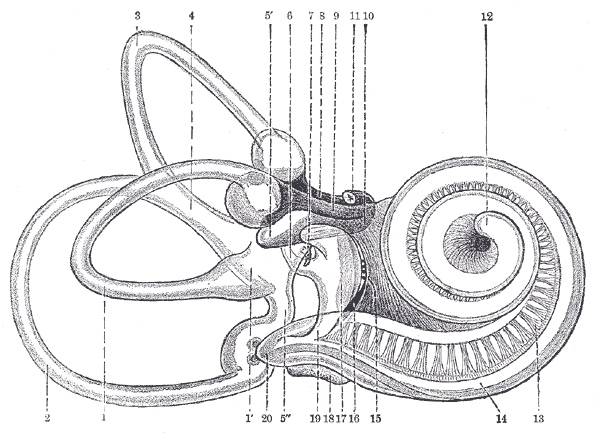
For this reason, at THE WELLS, we first use a neurological exam, balance function tests, and nystagmus testing to determine whether the symptoms a patient experiences are spinning dizziness and whether the cause lies in the ear or the brain. If otoliths have come loose and ended up in the semicircular canals of the inner ear, causing BPPV, nystagmus, in which the eyes quiver rapidly, appears when the head changes position. At THE WELLS, we use nystagmus testing to confirm exactly which semicircular canal is involved and perform the canalith repositioning maneuver that matches it.
Meanwhile, if severe neck pain or a headache unlike any before comes on suddenly along with slurred speech or a vision problem such as seeing double, it may be a dissection, a tear in the vertebral artery, which is a blood vessel that runs through the neck, so you should first get emergency care without delay (Seemungal BM et al., 2022). You also need prompt medical care to check the blood vessels of the brain and the central nervous system when there are accompanying neurological symptoms in which the limbs on one side lose strength or your steps sway greatly when you are on your feet (Seemungal BM et al., 2022).
Upper Cervical and TMJ Correction to Realign a Misaligned Neck and Jaw
Once ear and brain disorders are ruled out and tension in the neck and jaw is confirmed as the cause of the dizziness, we start treatment that addresses structure and nerve function together. At THE WELLS, we first use X-rays of the cervical spine and TMJ to check the normal curve and the alignment of the neck bones, as well as the spacing and condition of the left and right TMJs. Our director then personally examines the patient's neck and jaw by hand, checks the tender points in the muscles and the range of motion of the joints, and identifies specifically which way the axis of the upper cervical spine and TMJ has shifted.
At THE WELLS, we do not stop at temporarily releasing only the knotted, compressed spots. We perform upper cervical and TMJ correction, which returns to its proper place the misaligned axis of the upper cervical spine and TMJ that has kept the muscles around the neck under pressure. In particular, the TMJ cranial nerve manual therapy that our director personally performs gently releases excessive tension in the muscles around the jaw.
TMJ cranial nerve manual therapy stimulates the cranial nerves connected to the area around the jaw joint, helping the brain correctly recognize the body's current position and state of balance again. The tissues around the jaw joint are closely connected to the system of the trigeminal nerve, one of the cranial nerves. So when muscle tension in this area is released and joint movement improves, the nervous system reacts less sensitively to external stimuli.
To stabilize the alignment and the sensory signaling system of a neck and jaw that have been stiff for a long time, you receive upper cervical and TMJ correction steadily rather than ending it after a few sessions. If the neck and shoulder muscles have stiffened so firmly that they are hard to work on directly by hand, we use WINBACK radiofrequency along with the correction to warm the deep muscle layers and gently release the tension.
How Much Did Cervicogenic Dizziness Decrease in Randomized Trials?
Researchers in Australia conducted a randomized controlled trial of 86 patients with chronic cervicogenic dizziness. The trial compared groups that received one of two manual therapies that move the neck joints by hand, the Mulligan technique (SNAG) or Maitland joint mobilization, with a group that received sham treatment (Reid SA et al., 2014). The two groups that received manual therapy had less severe dizziness than the sham treatment group right after treatment and 12 weeks later, and they also had dizziness less often 12 weeks later (Reid SA et al., 2014). No serious adverse effects lasting more than 24 hours appeared during the study period (Reid SA et al., 2014).
Patients in the same trial received 2 to 6 treatment sessions over 6 weeks depending on their individual condition. In long-term follow-up to 12 months after treatment ended as well, dizziness frequency and the score that shows how much dizziness disrupts daily life (Dizziness Handicap Inventory, DHI) stayed lower in the two manual therapy groups than in the sham treatment group (Reid SA et al., 2015).
There are also results from research that focused on the upper cervical spine. In one randomized trial, patients with cervicogenic dizziness whom ENT and neurology specialists had referred after ruling out ear and brain disorders received manual therapy that gently pulled and corrected the upper cervical spine. Dizziness intensity and DHI scores measured 2 days and 4 weeks after treatment were lower than in the control group. In the same trial, the range through which patients could turn the neck left and right without dizziness while keeping their gaze fixed on one spot ahead also increased more in the treatment group.
According to a systematic review and meta-analysis that pooled data from a total of 898 patients in 13 randomized controlled trials of this kind, there is moderate-quality evidence that manual therapy reduces cervicogenic dizziness, neck function problems, and balance problems (De Vestel C et al., 2022). In the end, the goal of upper cervical and TMJ correction and manual therapy is to regain a comfortable daily life in which, even on a day when your neck is somewhat stiff amid a busy routine, your head does not float when you turn to look back and your body does not sway when you walk.
Related Articles
- BPPV Symptoms and Differential Diagnosis: The Cause of Spinning Dizziness After a Change in Position
- Vestibular Neuritis: When Dizziness Lasts Days Instead of Seconds, the Cause Is Different from BPPV
References
- Li Y, Yang L, Dai C, Peng B (2022). Proprioceptive Cervicogenic Dizziness: A Narrative Review of Pathogenesis, Diagnosis, and Treatment.. J Clin Med. PMID: 36362521
- Seemungal BM, Agrawal Y, Bisdorff A, Bronstein A, Cullen KE, Goadsby PJ (2022). The Bárány Society position on 'Cervical Dizziness'.. J Vestib Res. PMID: 36404562
- Reid SA, Rivett DA, Katekar MG, Callister R (2014). Comparison of mulligan sustained natural apophyseal glides and maitland mobilizations for treatment of cervicogenic dizziness: a randomized controlled trial.. Phys Ther. PMID: 24336477
- Reid SA, Callister R, Snodgrass SJ, Katekar MG, Rivett DA (2015). Manual therapy for cervicogenic dizziness: Long-term outcomes of a randomised trial.. Man Ther. PMID: 25220110
- Carrasco-Uribarren A, Rodríguez-Sanz J, López-de-Celis C, Fanlo-Mazas P, Cabanillas-Barea S (2022). An upper cervical spine treatment protocol for cervicogenic dizziness: a randomized controlled trial.. Physiother Theory Pract. PMID: 34496721
- De Vestel C, Vereeck L, Reid SA, Van Rompaey V, Lemmens J, De Hertogh W (2022). Systematic review and meta-analysis of the therapeutic management of patients with cervicogenic dizziness.. J Man Manip Ther. PMID: 35383538
- Reid SA, Callister R, Katekar MG, Rivett DA (2014). Effects of cervical spine manual therapy on range of motion, head repositioning, and balance in participants with cervicogenic dizziness: a randomized controlled trial.. Arch Phys Med Rehabil. PMID: 24792139
Frequently Asked Questions
Q. If ear tests show nothing abnormal, is the diagnosis cervicogenic dizziness?
If your ear test results are normal, we check which tests you had and tell apart the remaining possible causes, such as vestibular migraine or a nervous system disorder. Keeping a record of when your neck pain and dizziness started and which postures bring on the symptoms helps in assessing how your neck symptoms and dizziness are related.
Q. If an X-ray shows a straight neck, does it tell you the cause of the dizziness?
A straight neck finding is information that describes the curve and alignment of the neck bones, and telling apart the cause of dizziness also requires knowing how the symptoms came about and what the physical examination shows. At THE WELLS, in addition to the X-ray findings, we examine tender areas in the neck and jaw and measure joint range of motion to decide which areas to treat.
Q. How does the neck manual therapy used in the study differ from TMJ cranial nerve manual therapy?
The study described in this article used the Mulligan technique and Maitland joint mobilization, which move the neck joints, whereas in TMJ cranial nerve manual therapy at THE WELLS, we release tension in the muscles around the jaw. We treat the study figures separately, as results of the cervical manual therapy used in the research. When TMJ treatment is given alongside it, we record the intensity and frequency of dizziness and the changes in neck and jaw pain separately to assess treatment progress.